
The Secret Life of Barnacles
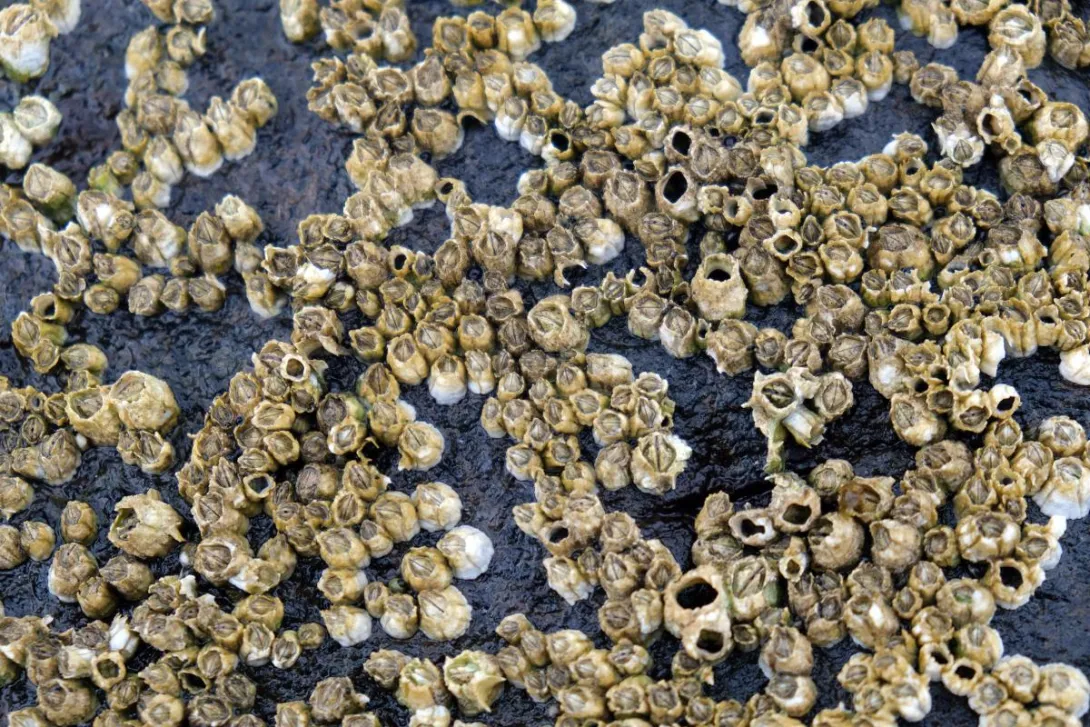
Barnacles may look like tiny white specks on rocks and piers, but they’re some of the ocean’s most extraordinary creatures!
Barnacles are crustaceans—relatives of crabs and lobsters—but they live a very different life. As larvae, they swim freely in the ocean. But once they find a suitable surface, they undergo a dramatic transformation in less than 24 hours: they glue themselves headfirst to the substrate, transform and build a protective limestone shell around their bodies.
One of the barnacle’s most remarkable adaptations is its glue. This natural adhesive hardens underwater and is so strong it can hold fast in pounding surf. Scientists are trying to mimic it for use in bone repair, dental adhesives, and even underwater robotics.
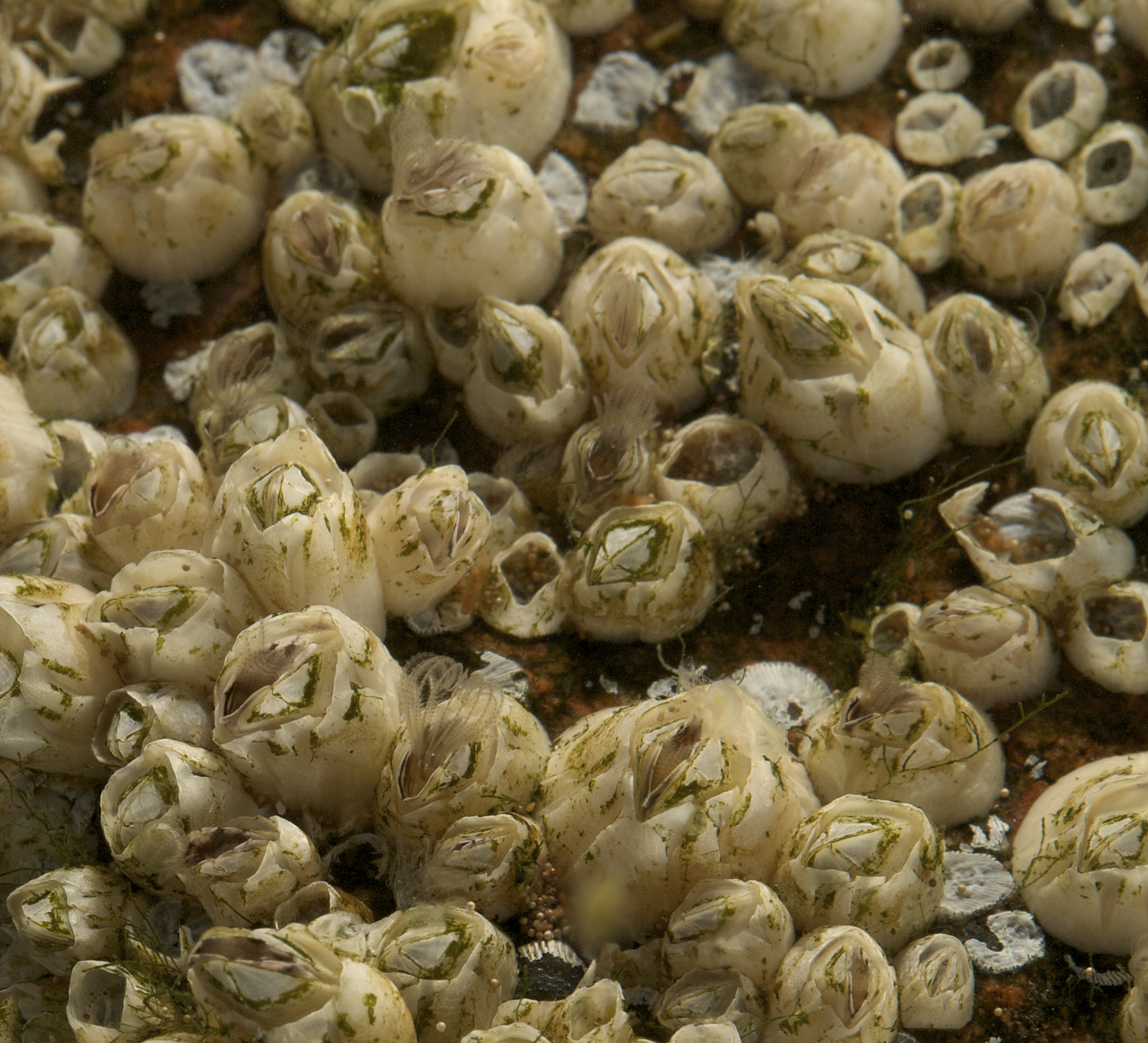
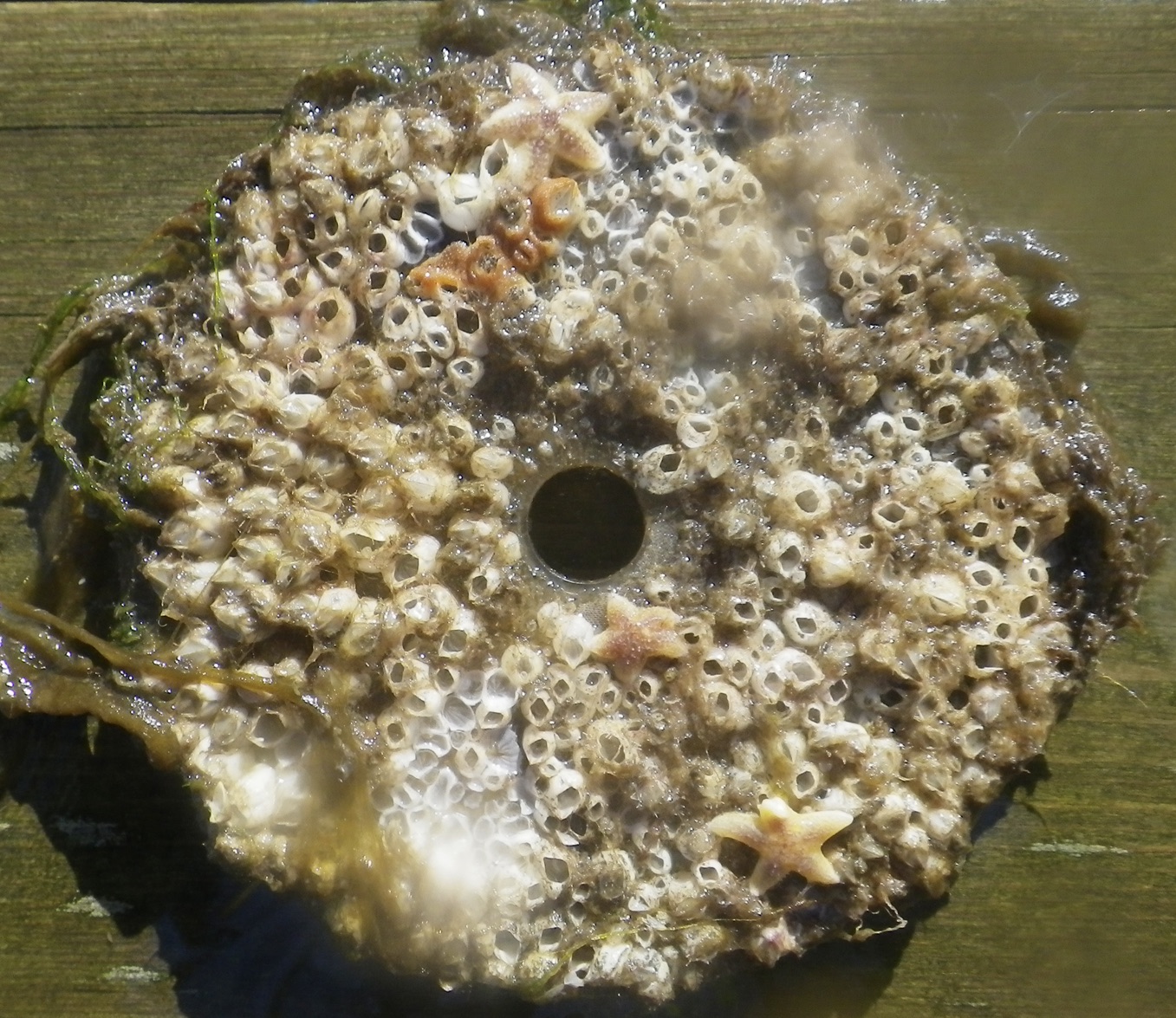
Some barnacles are commonly found on VIRTUE-discs and boat hulls. Other barnacle species, like the Coronula diadema barnacle, are specialized to only live on humpback whales. There are over 1000 species of barnacles around the world, and many of them are now found globally after being spread via shipping.
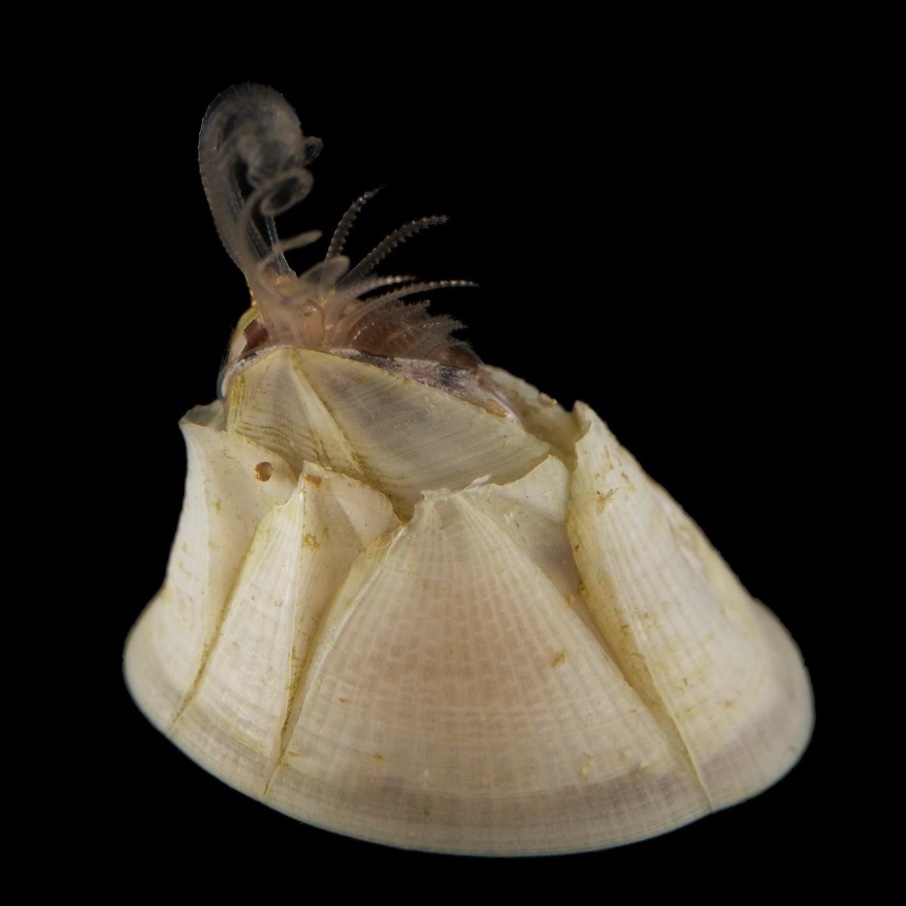
Barnacles have feathery appendages called cirri to catch plankton from the water for food. In intertidal zones, they form dense colonies that provide shelter for small marine organisms, affect nutrient cycling, and even the settlement patterns of other species.
While most barnacles are harmless filter feeders, some species—like Sacculina—are parasitic. They invade crabs, hijack their bodies, and even manipulate their behavior and reproduction. The crab becomes a zombie host, raising barnacle offspring instead of its own! Barnacles also have an extraordinary reproductive strategy: they are hermaphrodites, meaning that they are female and male at the same time. If that wasn’t cool enough, being sessile (living attached) required them to evolve the longest penis relative to body size in the animal kingdom to reach nearby mates!
Barnacles have been around for over 500 million years. Fossilized barnacles have been found on ancient marine reptiles and even on shipwrecks from centuries ago, helping archaeologists date and study maritime history. Barnacles also played a pivotal role in the history of science. Before publishing “On the Origin of Species” (the theory of evolution), Charles Darwin spent eight years studying barnacles. His work helped establish the foundations of evolutionary biology and it sharpened his thinking about variation and natural selection.
From their superglue-like to their evolutionary significance, barnacles are a testament to nature’s ingenuity. Next time you spot one on a rock, or while studying a VIRTUE-disc, take a moment to appreciate these fascinating little creatures!