

Get started
Introduction
Biodiversity is the variation of all living things on Earth. Biodiversity can be studied at different levels. The one that is most often thought of is the number of species. But it can also be the variation within a species, that is, at a genetic level, or the variation of habitats or ecosystems.
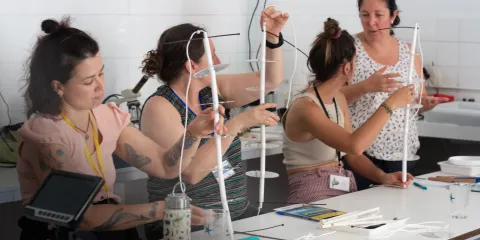
In the BiodivOcean project, you study the biodiversity of the ocean by hanging out simple research equipment, so-called VIRTUE racks, which you then pick up and examine to discover which different species are living on them.
The Earth's biodiversity is threatened by several different human activities such as how we use land and marine environments, catching and harvesting wild animals and plants, pollution such as plastic waste, climate change and invasive alien species.
In the BiodicOcean project, you can do research to help and look for invasive alien species and microplastics.
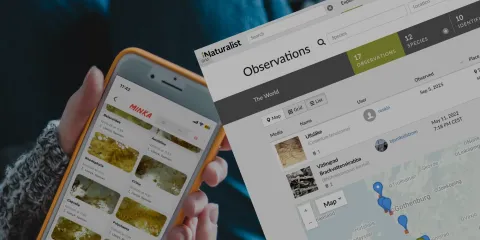
When you collect and report invasive alien species and the amount of microplastics in the ocean to online databases, you help authorities and researchers collect important data. When the public helps research in this way, it is called citizen research.
When you participate in the BiodivOcean project, you become a citizen scientist!
Get started, Investigate and Report
On these three pages, you will find information that will help you build, hang out, take up and investigate the VIRTUE racks in the ocean. You will also find information on how to report the species you have found on the racks so that other participants and researchers can see which species you have found.
Build a VIRTUE rack
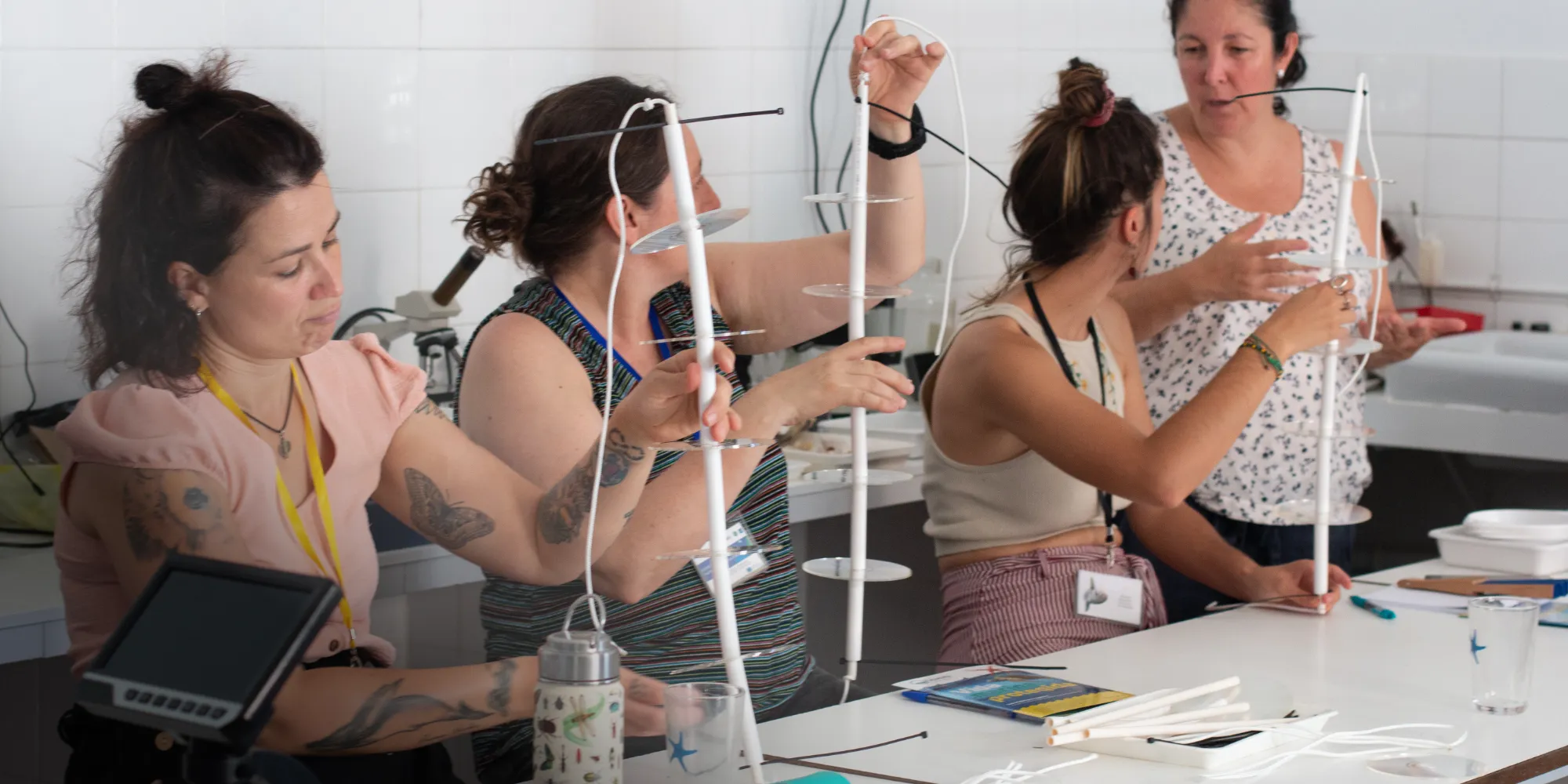
The rack is built by placing a pair of CD-shaped plastic discs back-to-back (composed of 3 mm PET-G or acrylic plastic) with fixed distances of 10 cm between each pair. We recommend using 5 sets of discs per rack. When the discs are retrieved out of the water, it is easy to examine the upper and lower sides because it consists of two separate discs. You can also use acrylic plastic instead of PET-G, but acrylic is not as durable as PET-G.
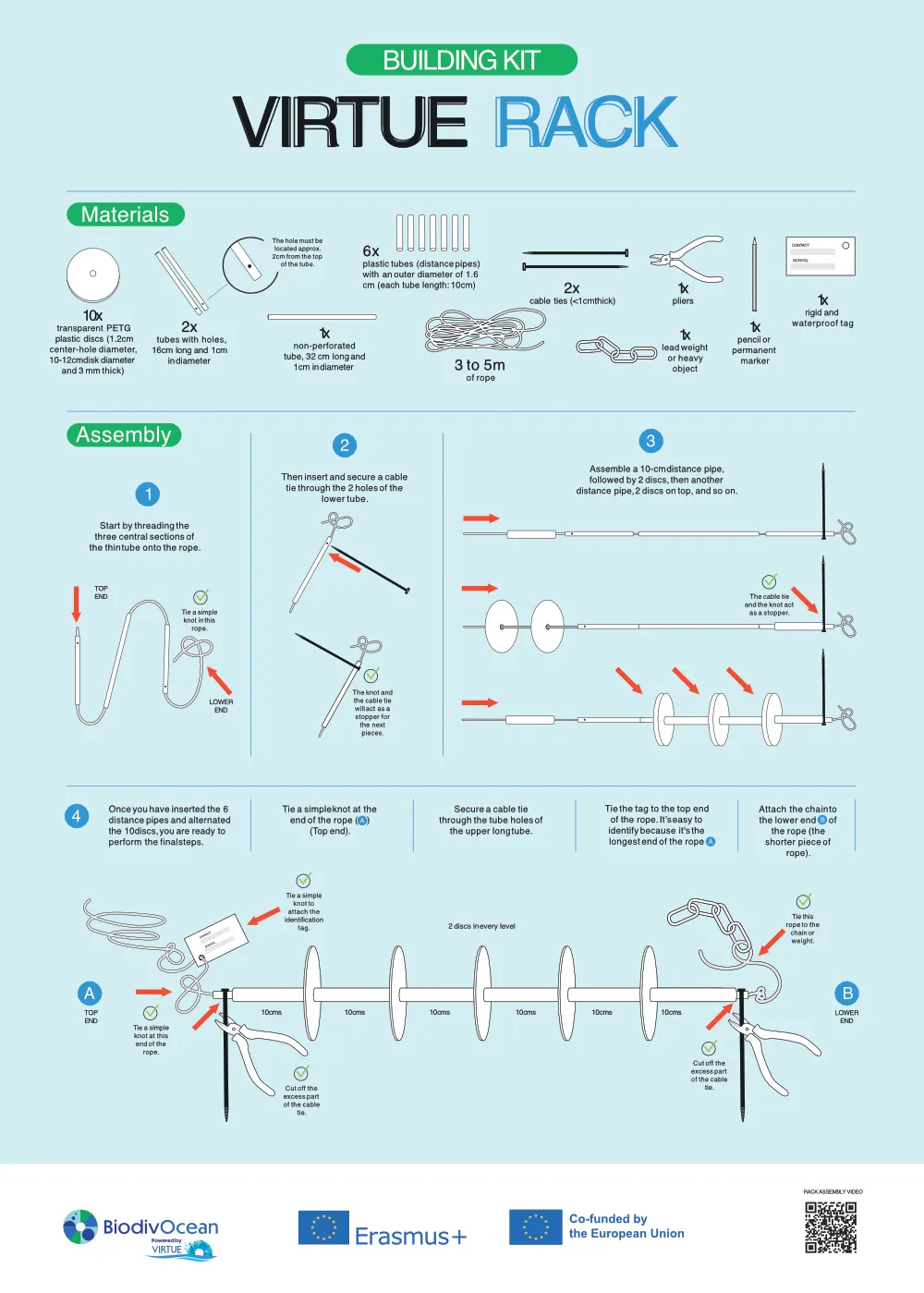
Download the instructions.
Supplies for 4 VIRTUE discs:
- 4 x 10 transparent plastic discs (with a center hole)
- 1 Electrical installation pipe with outer diameter of 10-12 mm (length is usually 300 cm if you buy in electrical stores)
- 1 Electrical installation pipe with outer diameter of about 16 mm (length is usually 300 cm if you buy in electrical stores)
- 8 pcs of cable tie (available in hardware stores)
- 1 white, plastic sign (cut from a plastic sheet)
- Rope (syntetic 4-5 mm, enough length for the specific place) and weights (could be almost anything).
Deploy the racks in the ocean
Racks can be deployed in freshwater, brackish water or sea water. They should be easily accessible for the students and should be placed on quays, jettys or similar. Please read the coordinates of the site using GPS on a cell phone, as it is information that you will later report together with your observations.
This video shows how to find a suitable place to hang the rack. The film was produced in a previous VIRTUE project and you can also find it on the VIRTUE website.