
Invasive Alien Species are a threat to the Earth's Biodiversity
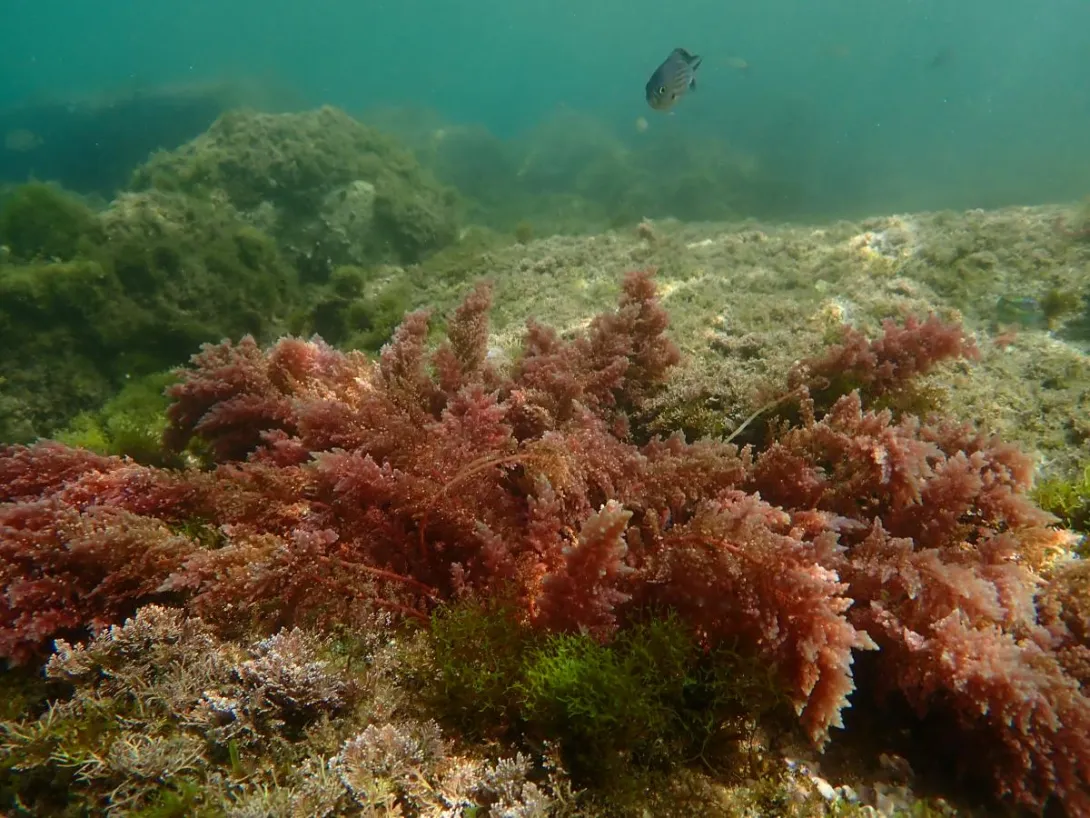
The Red sea plume (Asparagopsis taxiformis) is a red alga widely distributed across tropical to warm temperate waters. In the Mediterranean it has become an invasive alien species in several places that can compete with native macroalgae and affect local biodiversity. It is an example of an invasive alien species that can be detected by the VIRTUE method. Photo: Björn Källström.
Invasive alien species are one of the biggest threats to Earth's biodiversity. In the BiodivOcean project, we use the VIRTUE method and citizen science to search for and report invasive alien species.
What is biodiversity?
When we talk about the Earth's biodiversity, we mean all living things on Earth. We can study biodiversity at three different levels. The most obvious level to think about is the diversity of species, i.e. how many different species there are in an area or on the entire Earth. Another level of biodiversity is the variation that exists between individuals within a species. This is called genetic diversity and high genetic diversity allows a species to adapt to changes in the environment. The third level of biodiversity is the diversity of ecosystems, i.e. the different environments where species live.
What is an Alien Species?
Species naturally spread across the Earth and reach new areas, but it is a relatively slow process. There are limits to how far different species can swim, fly or walk to reach a new area. But when we humans transport ourselves and various goods across the earth, it can lead to species that we bring with us being moved over long distances in a short time. This can happen on purpose, for example, when we release animals and plants into the wild. It can also happen unintentionally, for example, when we transport goods by ship across the oceans and various species travel along as "free riders". A species that we humans have moved to a new area, intentionally or unintentionally, is called an Alien Species.
What is an Invasive Alien Species?
Some alien species that manage to survive and reproduce in the new area can sometimes start to spread in the new area for various reasons. For example, it can take a while for the predators that are naturally present in the area to learn to hunt the new alien species, and the prey that the new species itself hunts may not be able to protect themselves against the new alien species. This, and other advantages that the new alien species can gain in the new area, can cause the species to increase in numbers in the new area, and sometimes they can explode in numbers. This can in turn lead to the alien species competing out, eating prey, or transferring diseases to the species that are naturally present in the area so that they decrease in numbers or become extinct. An alien species that affects or has the potential to negatively affect biodiversity in a new area is called an Invasive Alien Species. An invasive alien species can also negatively affect us humans if it spreads diseases or eradicates species that we depend on for food.
The Intergovernmental Science-Policy Platform on Biodiversity and Ecosystem Services (IPBES) has listed invasive alien species as one of the five greatest threats to Earth's biodiversity.
How can we deal with the threat from Invasive Alien Species?
Authorities and researchers believe that the problem of invasive alien species will increase in the future as our transport across the earth increases. The ongoing climate change also enhances the effect of invasive alien species when increasing temperatures allow alien species to survive in more places on Earth. Due to the threat to biodiversity and to us humans, countries around the world need to develop methods to deal with invasive alien species.
The first step is of course to try to prevent species from being transported to new areas. This can be done through legislation but also by informing the public, for example, not to release alien animals into the wild. If a new invasive alien species has spread to a new area, it is very important that it is detected as early as possible. Early detection allows authorities to implement various measures to find and eradicate the invasive species. In the ocean, where many species spread efficiently, early detection of new invasive species is crucial to having any chance of stopping them. In the marine environment, early detection and rapid response are therefore particularly important to be able to deal with the threat from invasive alien species.
Citizen science is an important tool for detecting invasive alien species.
Authorities and researchers have limited resources and are unable to effectively monitor and search for invasive species along a country's entire coastline. An important help in monitoring invasive alien species is therefore when the public, who are out in nature, reports findings of invasive alien species. When the public helps researchers and authorities, it is called citizen science, and you can read more about citizen science in this blog post by Elina Hutton.
When you participate in the BiodivOcean project, you can become a citizen scientist and help search for and report marine invasive alien species. In the BiodivOcean project, we use the VIRTUE method to investigate marine biodiversity, investigate microplastics and to search for invasive alien species in the ocean.
You can learn more about the BiodivOcean project, the VIRTUE method and how to report biodiversity and invasive alien species on the online platforms iNaturalist and Minka on the project website.
Further Reading
IPBES Thematic Assessment Report on Invasive Alien Species and their Control https://www.ipbes.net/ias