

Investigate
Time to retrieve the rack
Video instruction (2 minutes)
If you only want to study what is growing on the discs at different times of the year, all discs can be observed at the same time. Or, if you want to follow the changes in the composition of the species over time, retrieve some discs and let others remain in place.
Certain types of data are good for collecting in situ, such as currents, salinity and temperature. But do not forget to bring water samples back to the classroom so that you can use some for your disc observations and measure water parameters, in order to understand why some species thrive and others do not.
Transport the discs to the classroom
VIRTUE discs can be transported in sealed, thick plastic bags with moisture-preserving, wet newspaper or a simple cooler with a tight fitting lid. Suitable bags can be purchased in aquarium stores and hardware stores. The air inside the bags / the cooler will thus have 100% humidity and the animals can do well with this oxygen supply. Close the bags with a cable tie or rubber strap. Keeping the bags cold increases survival time. Use a cool bag for transport. Place spacers between the discs, thus minimizing the risk of squeezing the animals. We have had complete survival for more than a day if the bags are kept cold.
The discs shall, as soon as possible, be placed in tanks, plastic boxes, small plastic aquariums or similar with water from the test area. Bring extra water for exchange later. Replace the water in the boxes with the discs each day or after the weekend. Do not forget to open the covers when you get back to the classroom (for oxygene exchange). Also, the discs can be placed into a tank with synthetic seawater that has the same temperature and salinity, if possible. (There are several recipes for artificial seawater on the web).
Examine the discs
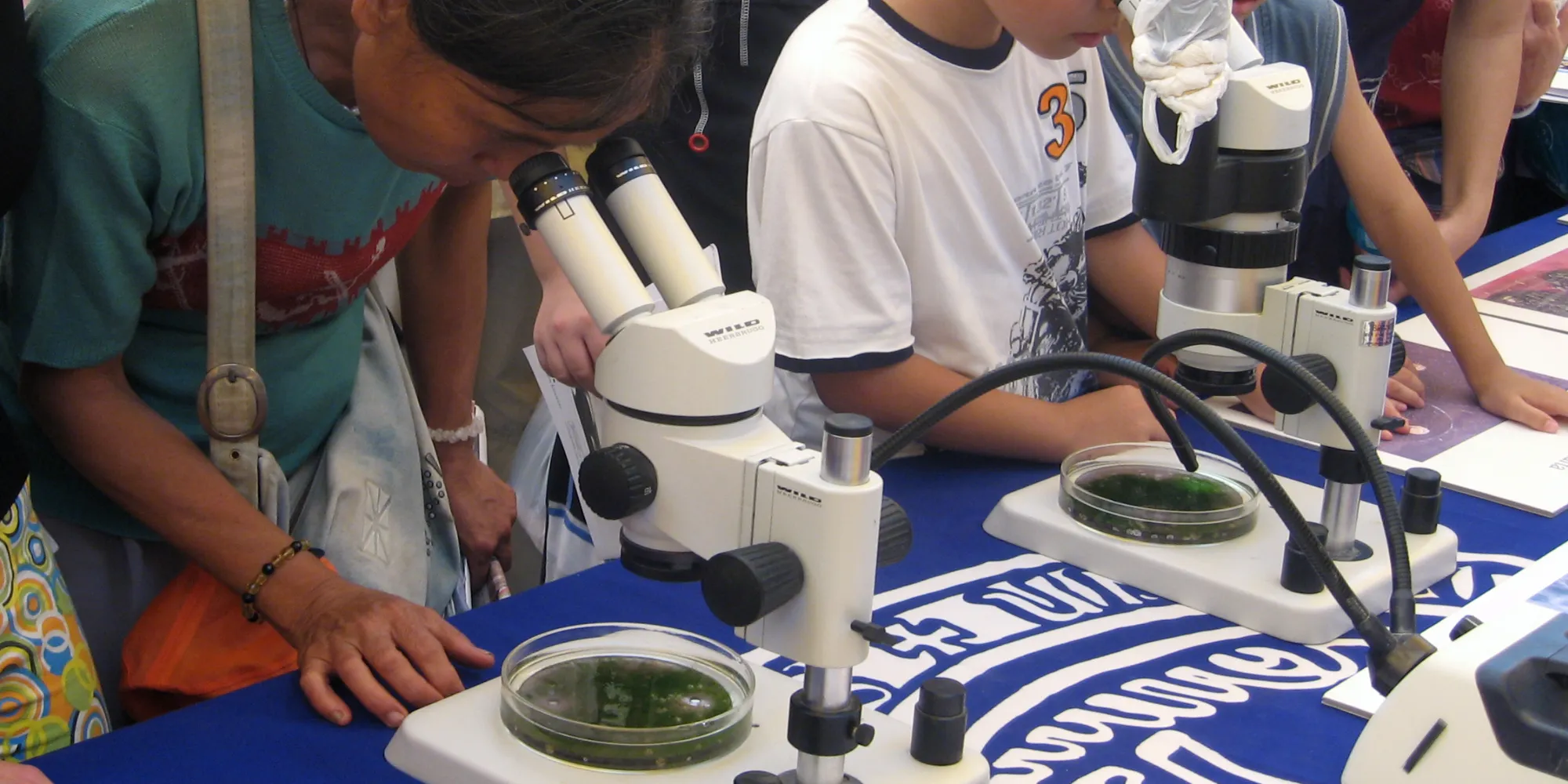
The animals and plants on the discs can be studied using magnifying glass, stereo loupe, microscope, or USB microscope. This is a VIRTUE video showing how you can use photo and video in microscopy:
The level of the study will, of course, change according to the age and knowledge of the students. One can choose to just look at the discs to try to identify the animals by species or group, or one can go deeper to determine connections and describe the biodiversity based on the collected information.
Often it may be beneficial to scrape off some of the fouling, make preparations and study them under a microscope in greater magnification. This is especially true when there are few larger organisms or when you want to study i.e. diatoms, which dominate in wintertime.
Plastic bowls for VIRTUE discs
It may be difficult to find an appropriate, high enough bowl to accommodate the discs under a stereo loupe. Cut the bottom part of a round plastic jar with bottom diameter of at least 140 mm (a normal VIRTUE disc is 120 mm, in the US,100 mm) with a height of 4 cm. Such jars are common for food packaging - ask at restaurants etc.
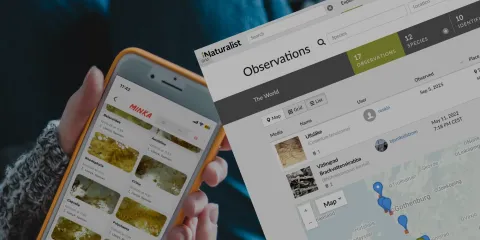
When your have examined the discs it is time to report the species you have found on the discs.
Click on "3. Report" below: